Halong Bay UNESCO World Heritage status is the reason many travellers put the bay on a first Vietnam itinerary, yet the details are often blurred: which year was it listed, what exactly is protected, and why do the islands look the way they do? The answers are short, and they change how you see the bay from the deck.
This guide sets out the listing history using sources we opened, explains the limestone geology in plain terms, retells the dragon legend behind the name and shows which stops on a Hermes Premium Cruises programme let you see the heritage landscape up close.
Halong Bay UNESCO World Heritage status dates from 1994 and 2000, and since 16 September 2023 the bay has formed part of the Ha Long Bay – Cat Ba Archipelago property. IUCN counts some 1,600 islands and islets of marine-invaded tower karst. On Hermes Premium, guests see this landscape from the deck and at Sung Sot Cave, Luon Cave and Titov Island.
What Is the Halong Bay UNESCO World Heritage Status?
Halong Bay was first listed by UNESCO in 1994, listed again in 2000, and since 16 September 2023 it forms part of the Ha Long Bay – Cat Ba Archipelago World Natural Heritage property. The bay is in Quang Ninh Province, in the Gulf of Tonkin; our guide to where Halong Bay is covers the geography.
Vietnam’s national tourism website reports that the 45th session of the World Heritage Committee, held in Riyadh on 16 September 2023, added Ha Long Bay – Cat Ba Archipelago to the list. It notes that Ha Long Bay alone had been listed in 1994 and 2000, and calls the new property Vietnam’s first inter-provincial UNESCO-listed heritage site. IUCN’s World Heritage Outlook, which publishes conservation assessments of natural World Heritage sites, records the inscription as 2000 and the extension to include the Cat Ba Archipelago.
| Date | What happened | Source |
|---|---|---|
| 1994 | Ha Long Bay first listed; Wikipedia’s summary links this listing to scenic beauty, criterion (vii) | Vietnam’s tourism site; Wikipedia |
| 2000 | Listed again; Wikipedia links it to geology and geomorphology, criterion (viii); IUCN records inscription in 2000 | Wikipedia; IUCN |
| 16 September 2023 | Ha Long Bay – Cat Ba Archipelago inscribed at the 45th session in Riyadh | Vietnam’s tourism site |
| Protected landscape | IUCN records some 1,600 limestone islands and islets under criteria (vii) and (viii) | IUCN |
Why Does Halong Bay Look Like This? Limestone Karst Explained
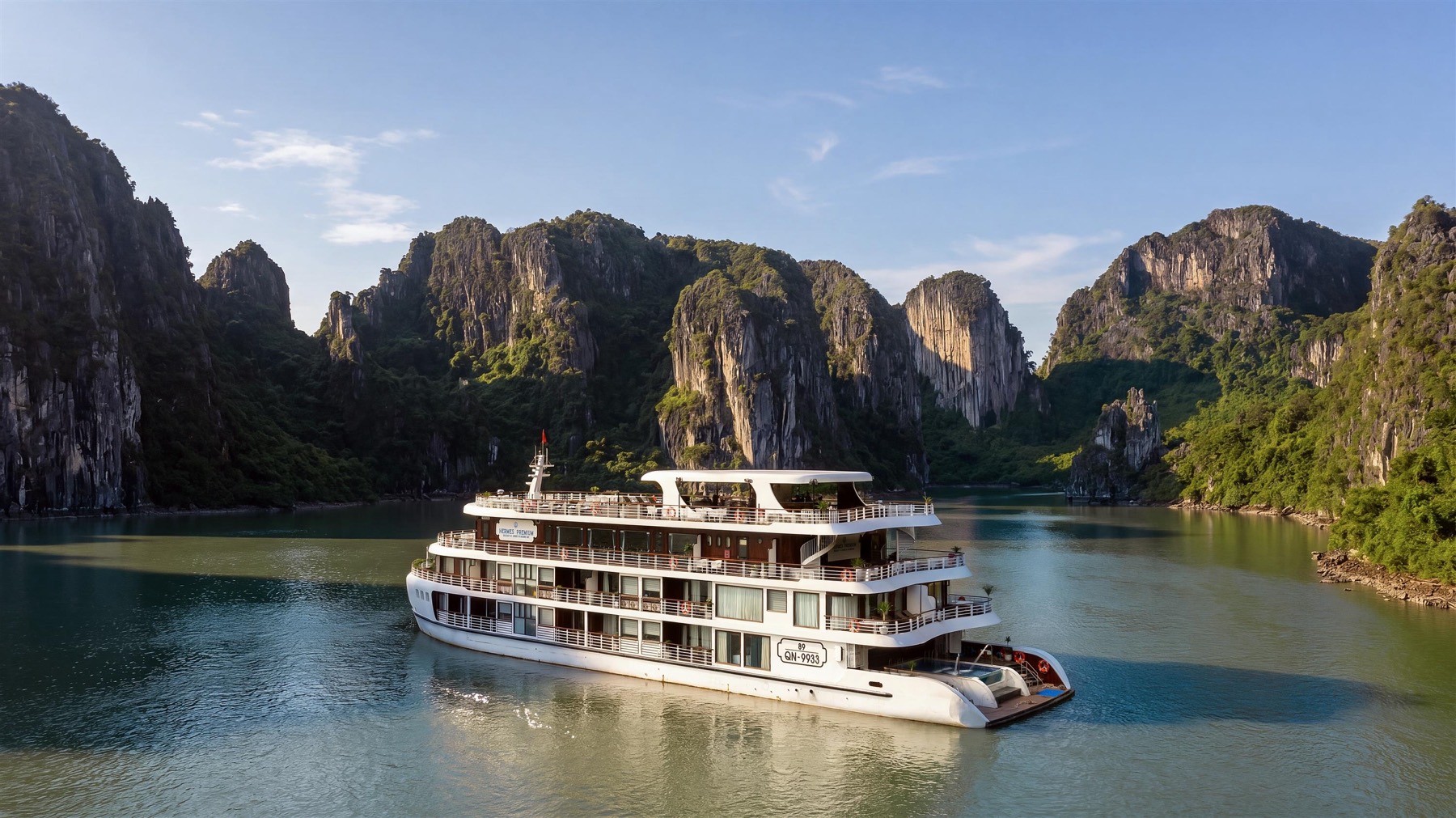
The bay is marine-invaded tower karst: limestone towers carved by rain and water over a very long time, then flooded by the sea so that only the towers show above the surface. IUCN counts some 1,600 islands and islets in the Gulf of Tonkin.
IUCN’s assessment groups the bay’s values under two natural criteria. Under (vii) it lists “a spectacular seascape of limestone pillars” and exceptional scenic beauty. Under (viii) it describes “the most extensive and best known example of marine-invaded tower karst in the world”, with the full range of karst formation processes. That is IUCN’s wording, quoted rather than ranked by us. Wikipedia’s summary of the listing adds that the bay has seen a complete karst evolution over about 20 million years.
The same IUCN page names two landforms you can spot from the water, and the table gives a simple way to look for them.
| Feature | What it is | What to look for from the deck |
|---|---|---|
| Fengcong | Clusters of conical peaks (IUCN) | Groups of rounded peaks that share a base |
| Fenglin | Isolated towers (IUCN) | Single steep towers standing apart in the water |
| Caves, notches and arches | Features IUCN lists among the bay’s karst landforms | Hollows at the waterline and openings in the cliffs |
| Marine lakes | Another karst feature IUCN lists | Hidden lagoons; Luon Cave opens into one |
🌿 Local Naturalist:
The limestone looks grey and pitted at the waterline and green above it. IUCN lists about 1,000 fish species in the bay, and it names the Cat Ba langur, a critically endangered primate, as the flagship species of the wider property. Keep your voice low at the caves: wildlife, including the monkeys guests sometimes see near Luon Cave, lives here.
The Dragon Legend Behind the Name Ha Long
Ha Long means “descending dragon”, and the best-known legend says the islands were made by a family of dragons sent to defend the Vietnamese people. It is a story, not a geological record, but it explains the name and gives the bay its character.
According to the Ha Long Bay World Natural Heritage website, the Jade Emperor sent the Mother Dragon and her children down to earth to protect the people from northern invaders. The dragons spewed gems and precious stones, which fell into the sea and became islands, forming a barrier that defeated the enemy fleet. The Mother Dragon and her offspring then stayed in the bay, and the place where the dragon descended became Ha Long. Wikipedia’s summary tells the same tale.
The Hermes Premium programme leans on the same sense of place. The 3 Days 2 Nights programme visits Trinh Nu Cave on Day 2 and describes it as one of the culturally and legendarily rich caves of the heritage bay, while a guide tells the story of the “fisherwoman” before a kayak outing.
🧭 Cruise Director’s Insider Tip:
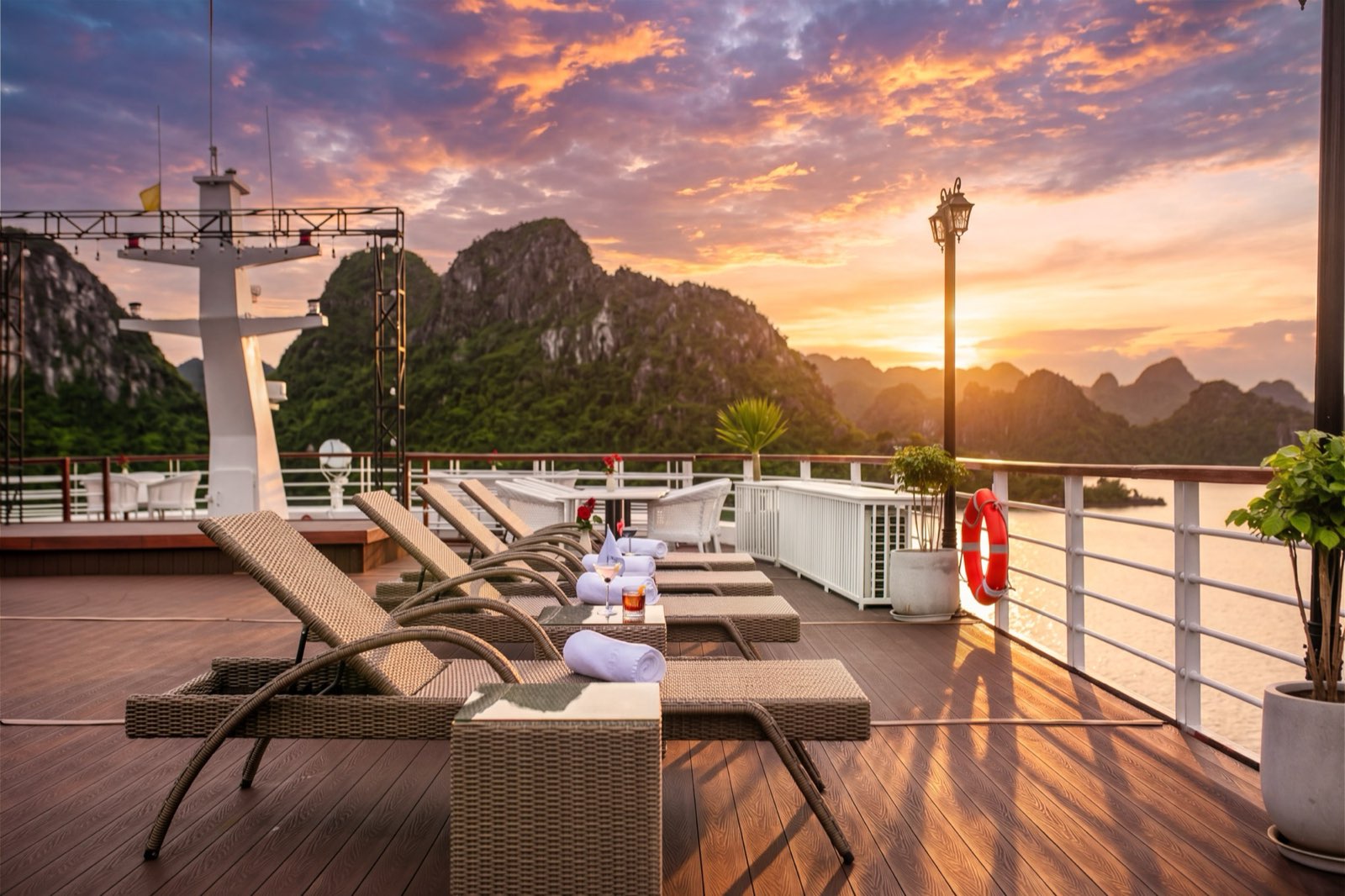
The light is kindest early and late. Afternoon tea at 17:00 comes with the sunset over the bay, and on the 2 Days 1 Night programme Tai Chi begins on the Sundeck at about 06:00. Keep your camera ready at both times, and look for fengcong clusters and lone fenglin towers as the shadows lengthen.
What to See on a Halong Bay Cruise: Heritage Stops on Hermes Premium
On a Hermes Premium cruise you see the heritage landscape three ways: from the water, inside the caves and from the summit of Titov Island. The 2 Days 1 Night programme packs the main stops into the first afternoon and the last morning.
| Stop | When | What you experience |
|---|---|---|
| Sung Sot Cave | 14:30, Day 1 | Giant stalactite formations that the programme says nature created over millions of years |
| Luon Cave | After Sung Sot Cave, Day 1 | Bamboo boat paddled by locals, or kayak; turquoise water and monkeys in their natural habitat |
| Afternoon tea at sunset | 17:00, Day 1 | The sunset over the bay from the Sundeck |
| Titov Island | 07:15, last morning | A climb of 424 steps to the summit, or a swim at the beach in good weather |
| Trinh Nu Cave | 3 Days 2 Nights, Day 2 | A visit with a local guide, followed by kayaking |
Each stop has its own guide: Sung Sot Cave, Luon Cave and Titov Island. The full timetable is on the 2 Days 1 Night itinerary page, and the 3 Days 2 Nights itinerary adds the day-boat day. Weather and tide can change the programme, and the beach stop is offered in good weather only.
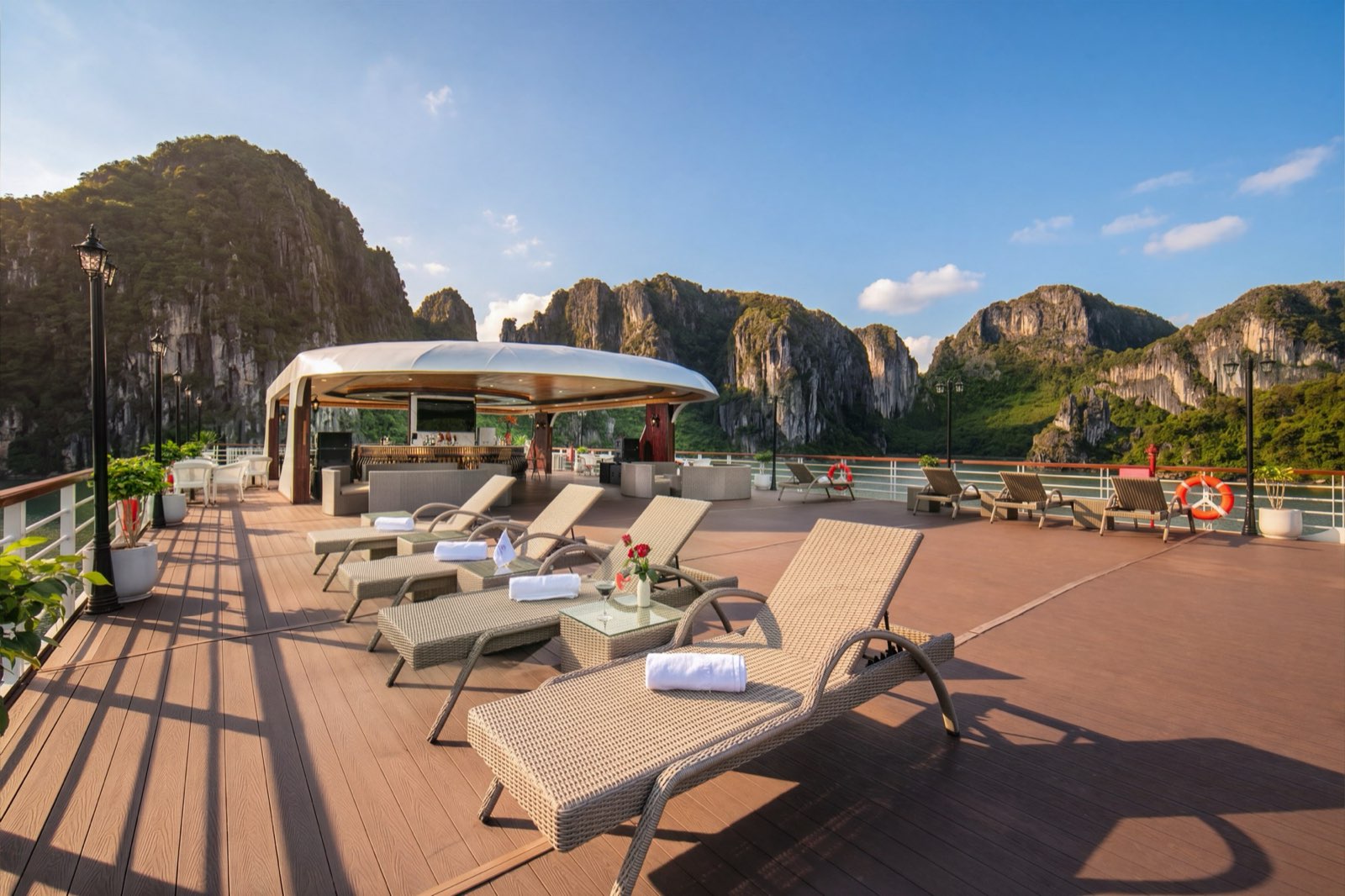
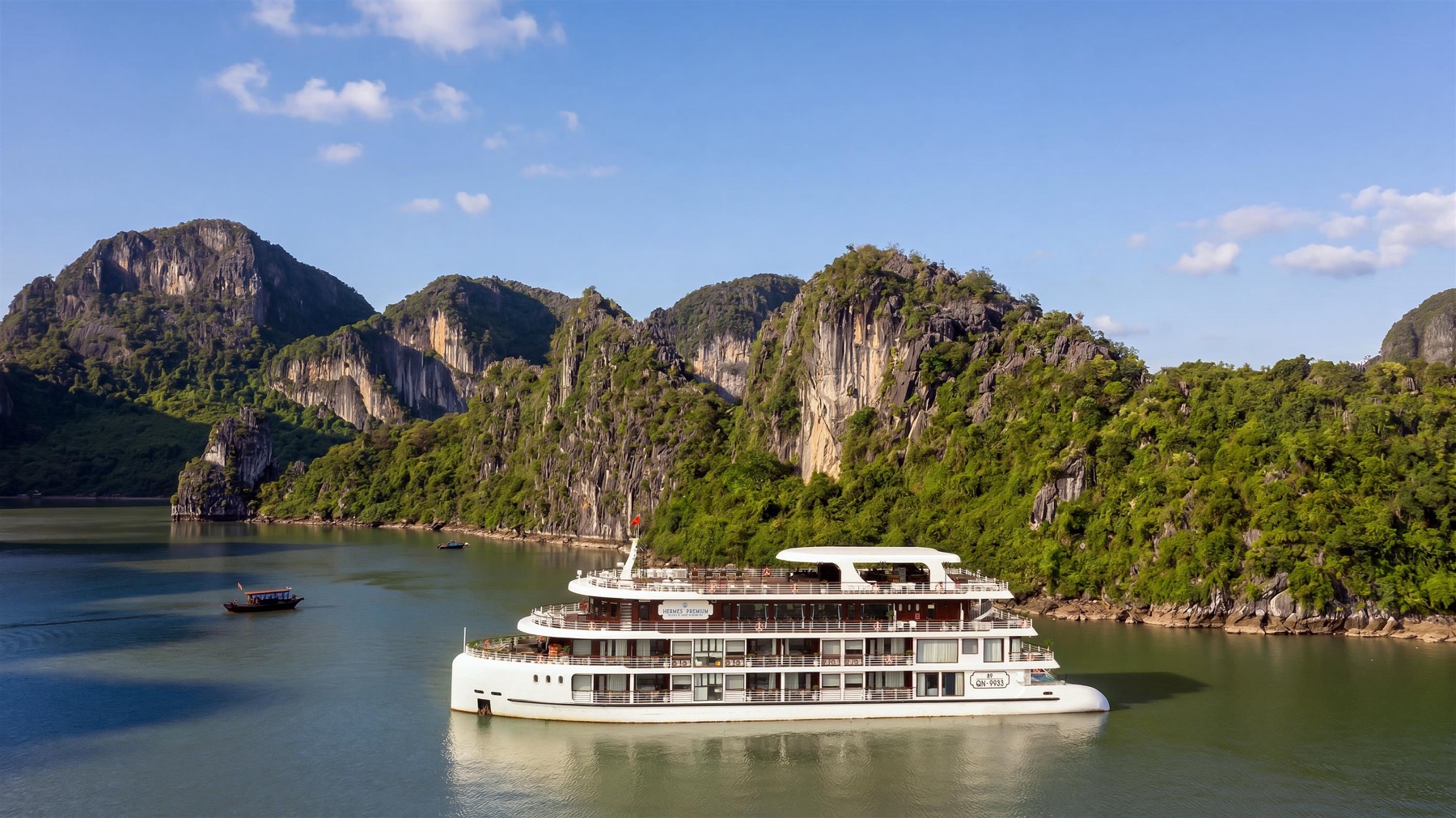
The ship shown here is the 26-cabin Hermes Premium Cruises, 57 m long and 13.85 m wide, with room for up to 89 guests and a berth at G112, opposite Lot 20 at Tuan Chau. Guests can also sail the heritage route aboard our intimate 18-cabin sister vessel Hermes Cruises — where every suite on the Hermes Cruises cabins & suites page includes a private balcony and jacuzzi bathtub, and the 2 Days 1 Night itinerary on Hermes Cruises visits Luon Cave and Titov Island on Day 1 afternoon and Sung Sot Cave on the final morning.
⚓ Captain’s Maritime Log:
Heritage sites are shared water. The programme says the itinerary may be adjusted for weather and tide, and low caves such as Luon Cave depend on the water level. If a stop changes, the view from the deck is still the heritage landscape.
Visiting a World Heritage Site Responsibly
Halong Bay protects some 1,600 limestone islands, hidden lagoons and around 1,000 fish species, so thoughtful habits on the water help keep the bay pristine. IUCN’s assessment highlights the importance of sustainable visitor practices across the Ha Long Bay – Cat Ba Archipelago.
Every guest on board can contribute with four simple habits during cave and lagoon excursions:
- Take rubbish with you. Carry any wrappers and bottles back to the ship.
- Keep to the paths in the caves. Formations grow slowly, so look and do not touch.
- Respect wildlife. Watch monkeys from the water, and do not feed them.
- Choose active, quiet options. Kayaking and the bamboo boat at Luon Cave are included in the programme and move at the speed of a paddle.
Who Will Enjoy the Heritage Side of the Bay Most?
First-time visitors, photographers and families enjoy it most, because the 2 Days 1 Night programme brings caves, a sunset and a summit into one overnight stay. Slow travellers can choose the longer programme.
- First-timers. The two-day programme covers the caves, a sunset and Titov Island, and it fits most plans.
- Photographers and nature lovers. Aim for 17:00 and the early morning, and bring a lens that handles low light inside the caves.
- Families. Titov Island offers a 424-step climb or a beach, and the bamboo boat suits younger children who would rather not paddle. Keep children close on cave steps.
- Slow travellers. The 3 Days 2 Nights programme adds a day boat, Trinh Nu Cave, kayaking and a beach stop in the second day.
Frequently Asked Questions (FAQs)
When did Halong Bay become a UNESCO World Heritage Site?
Halong Bay was listed in 1994 and again in 2000. Vietnam’s national tourism website says Ha Long Bay alone was listed in those two years, and IUCN records the inscription as 2000. On 16 September 2023 the combined Ha Long Bay – Cat Ba Archipelago property was added.
Why is Halong Bay a World Heritage Site?
For its scenery and its geology. IUCN’s assessment lists a spectacular seascape of limestone pillars and exceptional scenic beauty under criterion (vii), and marine-invaded tower karst with the full range of karst processes under criterion (viii). It counts some 1,600 islands and islets.
What is the legend of Halong Bay?
The legend says a Mother Dragon and her children were sent to defend the Vietnamese people. They spewed gems and precious stones that became islands and blocked an enemy fleet, then stayed in the bay. The name Ha Long means “descending dragon”.
Which stops on a Hermes Premium cruise show the heritage landscape?
Sung Sot Cave at 14:30 on Day 1, Luon Cave straight after, and Titov Island on the last morning. Sailing between islands and the 17:00 sunset tea add views from the water. The longer programme also visits Trinh Nu Cave.
How can guests help protect the World Heritage landscape during a cruise?
By following four simple habits on every stop. Stay on marked paths inside the caves, avoid touching stalactite formations, carry all bottles and wrappers back to the ship, and observe wildlife such as the monkeys near Luon Cave quietly from your kayak or bamboo boat.
What is the difference between Halong Bay and the Ha Long Bay – Cat Ba Archipelago?
The 2023 property adds the Cat Ba Archipelago to the original Ha Long Bay listing. Vietnam’s tourism site places Cat Ba Island to the south of Ha Long Bay and calls the combined property the country’s first inter-provincial UNESCO site. Both Hermes Cruises and Hermes Premium sail in Halong Bay, and the itineraries name each stop.
If the heritage bay is on your list, the team can help you choose between our two ships and itineraries. Write to [email protected] or start from the Hermes Cruises reservation page and the Hermes Premium reservation page.